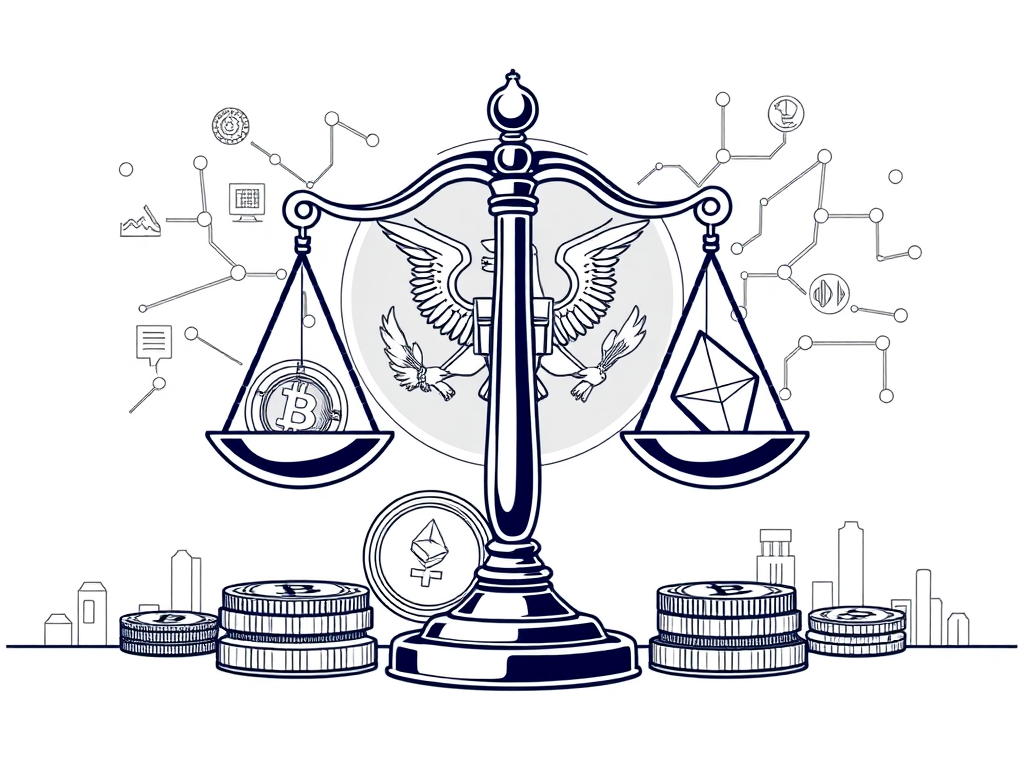
The U.S. Securities and Exchange Commission (SEC) has sharpened its regulatory focus on crypto staking. This is a key feature of many blockchain networks. Recent enforcement actions and shifting legal arguments show that the agency is recalibrating its approach. This is raising new compliance challenges for exchanges and decentralized platforms.
Staking Under Scrutiny
The SEC has long argued that certain crypto staking programs constitute unregistered securities offerings. This position was made clear in February 2023 when the agency settled with Kraken over its U.S.-based staking service, requiring the exchange to pay $30 million in penalties and cease offering staking to U.S. customers. The SEC’s rationale: Kraken’s program amounted to an investment contract under the Howey Test, primarily due to the pooling of customer assets and the promise of returns.
However, recent litigation has revealed a subtle but important shift. In ongoing proceedings against Coinbase, the SEC appears to be narrowing its claims. Initially, the SEC asserted that Coinbase’s staking-as-a-service offerings were securities. More recent filings emphasize the bundled features of the program. These features include marketing, custody, and reward distribution rather than staking itself.
This suggests that the SEC may now be targeting the manner in which staking services are packaged and promoted, rather than staking as a consensus mechanism per se.
Implications for Centralized and Decentralized Providers
The implications of this shift are significant. Centralized providers must now carefully consider how their staking offerings are structured. Services that involve user asset pooling, profit-sharing, or active promotion of returns may increase the risk of being categorized as a security.
For decentralized protocols, the picture is more complicated. Pure protocol-level staking, where users interact directly with smart contracts and retain control of their assets, may fall outside the SEC’s jurisdiction — at least for now. Still, front-end interfaces, middleware providers, and DAO-affiliated entities could attract scrutiny if they resemble traditional intermediaries.
A Moving Target for Compliance
The legal landscape remains fluid. In March 2024, a federal judge in the SEC v. Terraform Labs case reinforced the view that digital assets and their surrounding ecosystems can constitute securities under certain conditions, even without a formal contract. At the same time, courts are increasingly distinguishing between tokens and the transactions or programs built around them.
Industry participants should monitor not just SEC actions, but also statements from the Commodity Futures Trading Commission (CFTC), state regulators, and international bodies. Inconsistencies between these authorities — such as the CFTC’s more permissive stance on staking and yield products — further complicate compliance.
Conclusion
As the SEC evolves its legal strategy on staking, crypto platforms must adapt quickly. Firms offering staking services to U.S. users should reassess their business models, marketing materials, and custody arrangements in light of recent enforcement trends and court decisions.
Kelman PLLC continues to advise clients navigating the fast-changing regulatory landscape for digital assets. For more information or to schedule a consultation, please contact us.