

SEC
-
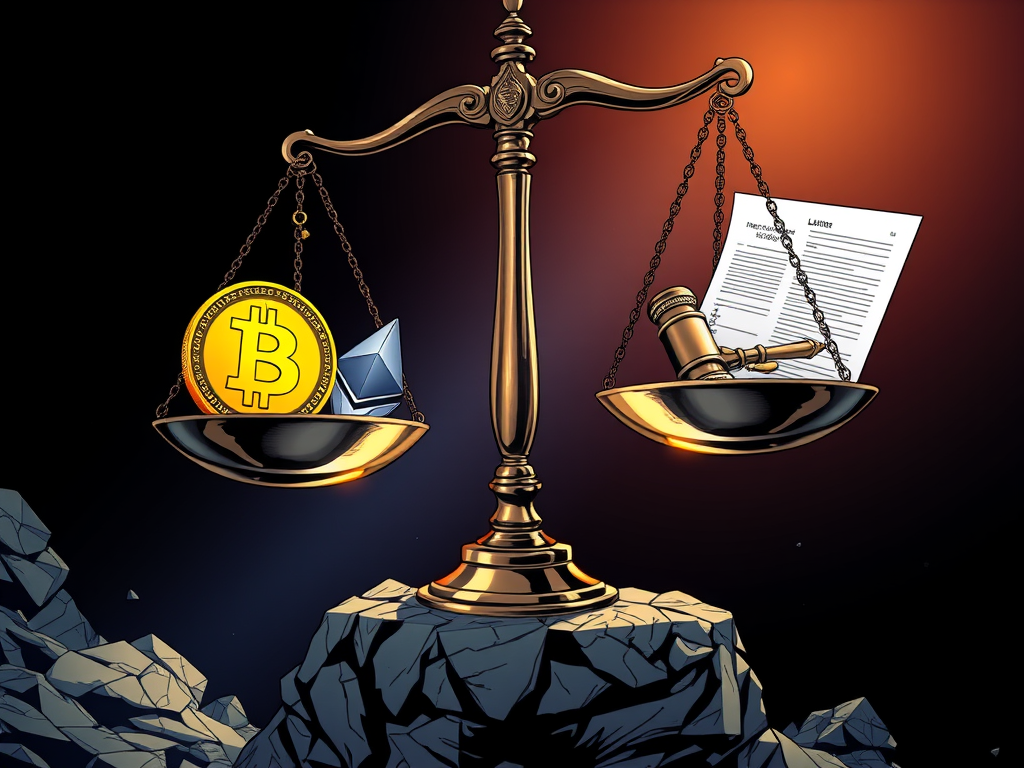
Is Crypto a Security? (Part IV: DeFi, Staking, Airdrops, NFTs)
Read More: Is Crypto a Security? (Part IV: DeFi, Staking, Airdrops, NFTs)Digital-asset activity has evolved far beyond simple token sales. Today, many of the most consequential legal questions arise not from standalone issuances, but from programmatic mechanisms—staking arrangements, liquidity pools, lending protocols, airdrop campaigns, and NFT ecosystems. These structures often challenge traditional securities analysis because value is generated through a mix of code, incentives, governance, and…
-
Is Crypto a Security? (Part III: Secondary Transactions)
Read More: Is Crypto a Security? (Part III: Secondary Transactions)The Token Itself Is Not Always the Security A central development in modern crypto jurisprudence is the growing recognition that a token, standing alone as a digital object, is not automatically a security. What may constitute a security is the investment contract—the arrangement, scheme, or promises surrounding the token’s distribution—rather than the token itself. Several…
-
Is Crypto a Security? (Part II: Utility Tokens)
Read More: Is Crypto a Security? (Part II: Utility Tokens)Since the inception of digital assets, “utility token” has been perceived as a non-security designation. However, the SEC has challenged this notion, treating utility as only one aspect of a broader evaluation under the Howey test. Courts assess whether purchasers rely on issuers’ efforts for token value, focusing on sales timing and issuer control. Even…
-
Is Crypto a Security? (Introduction)
Read More: Is Crypto a Security? (Introduction)The classification of crypto assets as securities remains a complex issue in 2025, despite years of regulatory scrutiny. Courts have varied in their interpretations, distinguishing between the tokens themselves and their sales context. While the SEC’s aggressive enforcement has created uncertainty within the regulatory environment, recent indications show a possible shift towards clearer guidelines and…
-

SEC’s Approach to Digital Assets: Key Insights from Paul Atkins
Read More: SEC’s Approach to Digital Assets: Key Insights from Paul AtkinsIn Paul Atkins’ speech, “The SEC’s Approach to Digital Assets,” he indicates a shift in the SEC’s regulatory stance, from strict enforcement to embracing digital asset innovation while prioritizing market integrity. He introduces a taxonomy for digital assets, distinguishing between securities and non-securities based on their functionality. Atkins highlights that tokens might evolve from investment…
-

SEC and CFTC Joint Statement on Spot Crypto Trading
Read More: SEC and CFTC Joint Statement on Spot Crypto TradingThe SEC and CFTC’s joint statement clarifies that registered exchanges can facilitate trading in certain spot crypto-asset products, promoting regulatory clarity and market innovation. While not binding, it encourages compliance and proactive engagement from exchanges. This marks a shift toward supportive regulation in the U.S. crypto landscape, focusing on investor protection and market integrity.
-
Hester Peirce: Rethinking Financial Surveillance and Privacy in Crypto
Read More: Hester Peirce: Rethinking Financial Surveillance and Privacy in CryptoSEC Commissioner Hester Peirce’s speech at U.C. Berkeley highlighted tensions in digital finance between disintermediation and regulatory surveillance. She emphasized the need to rethink outdated legal doctrines, such as the third-party doctrine, and advocated for modernizing financial reporting to better protect privacy while ensuring compliance. The balance between liberty and security remains crucial.
-

Understanding the SEC’s August 2025 Update Regarding Crypto Staking
Read More: Understanding the SEC’s August 2025 Update Regarding Crypto StakingOn August 5, 2025, the SEC clarified that specific liquid staking activities may not constitute securities if providers adhere strictly to defined administrative roles. Staking Receipt Tokens serve as ownership evidence, not investment contracts. Non-compliance with assumptions could incur legal risks, especially in models involving discretion or guarantees.
-

Understanding SEC’s Staking Regulations for Crypto
Read More: Understanding SEC’s Staking Regulations for CryptoThe SEC’s staff statements from May and August 2025 clarify that certain protocol staking activities on PoS blockchains may not be classified as securities. However, the guidance is limited, specifically excluding staking arrangements with active third-party involvement or yield generation. DAO governance staking remains unaddressed, requiring careful legal analysis for compliance.
-

Impact of the Ripple-SEC Settlement on the Crypto Industry
Read More: Impact of the Ripple-SEC Settlement on the Crypto IndustryOn August 7, 2025, the SEC and Ripple Labs concluded their legal dispute, dismissing appeals related to the classification of XRP sales. The joint stipulation reflects a mutual decision to avoid further litigation. This case has implications for crypto regulation, offering insights on token classification and the limits of enforcement. Ripple can now operate without…